
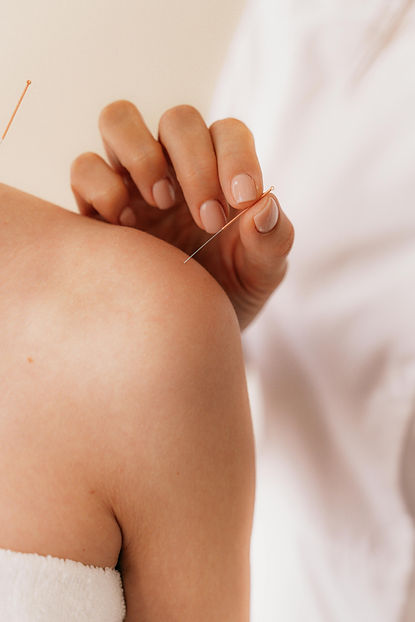
SHOULDER PAIN
Shoulder pain can range from a dull, persistent ache to sharp pain that limits movement and disrupts sleep. The shoulder is the most mobile joint in the body — and that mobility comes at the cost of stability, making it vulnerable to a wide range of injuries and overuse conditions. Whether you are dealing with a rotator cuff problem, a frozen shoulder, post-surgical stiffness or a sports injury, our osteopaths and remedial massage therapists at Dingley Health Hub are experienced in diagnosing and treating the full range of shoulder complaints, using targeted hands-on treatment and tailored rehabilitation to restore your strength, mobility and comfort.
Common Shoulder Conditions
Rotator cuff strain or tear
The rotator cuff is a group of four muscles — supraspinatus, infraspinatus, teres minor and subscapularis — that work together to provide both movement and dynamic stability to the glenohumeral (ball and socket) joint. Partial or full-thickness tears can result from an acute injury such as a fall onto an outstretched hand or a sudden heavy overhead lift, or from gradual cumulative degeneration in people who perform repetitive overhead activities over many years. Supraspinatus is the most frequently affected tendon due to its position and the compressive loads it is exposed to.
Symptoms include:
Pain with overhead movement and reaching behind the back, weakness when lifting or rotating the arm away from the body, a painful arc between 60 and 120 degrees of shoulder abduction, and night pain — particularly when lying on the affected shoulder. In full-thickness tears, the arm may feel difficult or impossible to hold at shoulder height without compensation from other muscles.
How we treat it:
Rotator cuff rehabilitation follows a carefully staged progressive loading model. The initial phase focuses on reducing pain and inflammation through hands-on therapy, activity modification and targeted soft tissue release of the muscles surrounding the tear. As symptoms settle, we progressively strengthen the rotator cuff in the scapular plane — the position that maximises tendon length and minimises impingement risk. Scapular stabiliser strengthening is incorporated alongside, as poor scapular control is a consistent contributing factor. Shockwave therapy is highly effective for calcific tendinitis and chronic partial tears, stimulating tissue remodelling in areas of degeneration. Full-thickness tears in active individuals are co-managed with orthopaedic surgeons, with our team providing pre-surgical optimisation and post-surgical rehabilitation.
Rotator cuff tendinopathy
Rotator cuff tendinopathy represents a spectrum of tendon pathology ranging from reactive tendinopathy — an acute overload response — through to degenerative tendinopathy involving chronic structural change to the tendon tissue itself. Supraspinatus tendinopathy is the most common shoulder tendinopathy and frequently coexists with impingement syndrome. Crucially, it is fundamentally a failure of tendon adaptation to load rather than a primary inflammatory condition — a distinction that has important implications for how it should be treated. Rest and anti-inflammatory medications alone will not resolve tendinopathy; progressive tendon loading is required.
Symptoms include:
A deep, aching shoulder pain that is worse with overhead or reaching activities, significant night pain that disrupts sleep, morning stiffness easing once the shoulder is warmed up, and a gradual onset over weeks to months rather than sudden onset following a single injury. Symptoms are typically provoked by repetitive overhead activities at work or in sport.
How we treat it:
Progressive tendon loading is the cornerstone of rotator cuff tendinopathy rehabilitation. We use an isometric-to-isotonic-to-functional progression, carefully matching the load to the tendon's current capacity at each stage and advancing only when the tendon demonstrates tolerance. Isometric exercises in the early, more painful phase provide pain relief while maintaining tendon stimulus. Shockwave therapy is incorporated for chronic or degenerative tendinopathy, as it stimulates neovascularisation and tendon remodelling in tissue that has lost its capacity to self-repair. Addressing the compressive loads that perpetuate tendinopathy — through posture correction, scapular control training and thoracic spine mobility — is essential to prevent recurrence. Return to full function typically takes 8–16 weeks.
Rotator cuff impingement syndrome
Subacromial impingement syndrome occurs when the supraspinatus tendon and the subacromial bursa are compressed between the humeral head and the acromion or coracoacromial arch during shoulder elevation. Contributing factors include poor scapular upward rotation, reduced posterior shoulder capsule flexibility, acromial shape variants and altered thoracic posture. Modern evidence has shifted understanding of impingement from a structural narrowing problem — once treated primarily with surgery to shave the acromion — to a movement control problem that responds very well to targeted rehabilitation.
Symptoms include:
A painful arc of shoulder elevation, typically between 60 and 120 degrees of abduction, pain reaching overhead or behind the back, difficulty with activities such as hanging washing, swimming or throwing, and positive Hawkins-Kennedy and Neer impingement tests on clinical assessment by your osteopath.
How we treat it:
Treatment focuses on restoring the movement quality that allows the supraspinatus tendon to pass through the subacromial space without compression. Scapular upward rotation is restored through targeted serratus anterior and lower trapezius strengthening — these muscles are almost universally underactive in impingement. Posterior capsule flexibility is addressed through specific stretching and joint mobilisation. Thoracic extension mobilisation improves the spinal foundation from which the shoulder girdle moves, often producing immediate improvement in shoulder elevation quality. Rotator cuff activation exercises restore the fine dynamic centring of the humeral head that prevents impingement during arm elevation. Most patients achieve full resolution within 6–10 weeks. GP co-management for a corticosteroid injection into the subacromial space is coordinated when acute inflammation is the dominant feature and is limiting participation in rehabilitation.
Post-surgical rotator cuff rehabilitation
Rotator cuff surgery — whether arthroscopic repair of a partial or full-thickness tear or open reconstruction — requires a carefully phased rehabilitation program to achieve an optimal outcome. The repaired tendon-to-bone interface is biomechanically vulnerable for the first 8–12 weeks post-surgery as biological healing occurs, and must be protected from overloading. At the same time, complete immobilisation leads to stiffness and muscle atrophy that significantly delays functional recovery. The balance between protection and progressive mobilisation is where our expertise lies.
Post-surgical recovery phases:
Weeks 0–6: Passive motion and pain management — protecting the repair while preventing stiffness.
Weeks 6–12: Active-assisted motion and gentle rotator cuff activation.
Weeks 12–24: Progressive resistance training and scapular stabiliser strengthening.
Weeks 24+: Sport or work-specific functional rehabilitation and return-to-activity testing.
How we treat it:
We provide surgeon-aligned rehabilitation that strictly respects the tissue healing constraints at each phase, ensuring the repair is not overloaded prematurely. Gentle glenohumeral joint mobilisation in the early phases prevents the capsular adhesion that can develop into a secondary frozen shoulder. As the repaired tissue matures, progressive rotator cuff and scapular stabiliser loading rebuilds the functional strength and neuromuscular control needed for full activity. We maintain regular communication with the operating surgeon throughout, adjusting the rehabilitation timeline based on intraoperative findings, tissue quality and the patient's individual response to loading.
Shoulder bursitis
Subacromial bursitis involves inflammation and thickening of the bursa that cushions the rotator cuff tendons beneath the acromion. It rarely occurs in isolation — in the majority of cases, bursitis is secondary to rotator cuff tendinopathy or impingement syndrome rather than being a primary diagnosis. Important exception: septic bursitis — infection within the bursa — is a medical emergency characterised by rapid-onset severe pain, warmth, redness and systemic features such as fever, and requires urgent GP or emergency review rather than manual therapy.
Symptoms include:
Diffuse shoulder pain that worsens progressively with elevation and reaching overhead, significant night pain disturbing sleep, swelling visible over the lateral shoulder in severe cases, tenderness on deep palpation over the lateral shoulder, and a characteristically rapid and dramatic pain response to corticosteroid injection into the subacromial space when inflammation is the primary driver.
How we treat it:
Management of acute subacromial bursitis begins with load modification — identifying and reducing the activities that are compressing the inflamed bursa — combined with gentle shoulder mobilisation to prevent the stiffness that develops rapidly with guarded movement, and ice therapy to reduce acute inflammation. Once the acute inflammatory phase has settled, we address the underlying mechanical cause that led to the bursitis developing in the first place — most commonly impingement from poor scapular control and rotator cuff activation. We co-manage closely with the patient's GP when a diagnostic ultrasound or therapeutic corticosteroid injection into the subacromial space is warranted to accelerate the initial inflammatory phase.
Frozen shoulder (adhesive capsulitis)
Adhesive capsulitis is characterised by progressive fibrosis and contracture of the glenohumeral joint capsule, resulting in a global loss of both active and passive shoulder movement. It progresses through three well-defined stages: the freezing stage (increasingly painful and progressively more restricted over 2–9 months), the frozen stage (maximally stiff but often less painful, lasting 4–12 months), and the thawing stage (gradual spontaneous recovery of movement over 5–24 months). Left untreated, total duration ranges from 1–3 years. Appropriate treatment at each stage significantly accelerates recovery and reduces pain and disability throughout the process.
Symptoms include:
Global restriction of all shoulder movements — particularly external rotation, abduction and internal rotation — with the key diagnostic feature being that passive range of movement equals active range (unlike rotator cuff tears, where passive range is preserved). Severe, often debilitating night pain during the freezing stage is typical. The condition most commonly affects women between 40 and 60 years of age, and is more common in people with diabetes, thyroid conditions and after prolonged shoulder immobilisation.
How we treat it:
Treatment is staged precisely to match the patient's current phase. In the freezing stage, pain management is the priority — gentle joint mobilisation within the pain-free range, heat therapy, activity modification and patient education about the expected timeline. Hydrodilatation (distension injection of the joint with saline and corticosteroid, performed by a GP or radiologist) is highly effective during the freezing and early frozen stages and is coordinated for appropriate patients. During the frozen stage, progressive glenohumeral capsular stretching and more aggressive joint mobilisation are introduced as pain tolerance allows. In the thawing stage, progressive strengthening of the rotator cuff and periscapular muscles is the focus as movement returns. We never rush the process — matching treatment to the stage is what produces the best outcomes.
Shoulder osteoarthritis
Glenohumeral osteoarthritis involves the progressive loss of articular cartilage and subchondral bone changes within the shoulder joint. It is less common than hip or knee osteoarthritis, but becomes increasingly prevalent after age 60 and can cause significant pain and stiffness that affects sleep, overhead activity and the ability to reach and lift. Unlike hip and knee OA, shoulder OA often causes more stiffness than pain in the early-to-moderate stages, with pain becoming more prominent as cartilage loss progresses. The condition can be post-traumatic (following fractures or dislocations) or primary degenerative.
Symptoms include:
Deep joint aching with movement, grinding or clicking sensations on shoulder rotation (crepitus), progressive loss of rotation range — particularly external rotation — pain at the end of the available range rather than a mid-arc painful arc, difficulty with overhead activities and sleeping on the affected side, and palpable joint enlargement in advanced cases.
How we treat it:
While arthritic changes cannot be reversed, pain, stiffness and functional capacity can be substantially improved with appropriate conservative care. Joint mobilisation maintains the available glenohumeral movement and reduces arthritic stiffness — regular treatment is more effective than sporadic care. Rotator cuff and periscapular strengthening offloads the arthritic joint surfaces, reducing pain with activity. Heat therapy before exercise loosens stiff arthritic joints and improves the quality of subsequent movement. Activity pacing advice allows patients to remain active without provoking significant flare-ups. Total shoulder arthroplasty (shoulder replacement) produces excellent pain relief and functional outcomes for end-stage glenohumeral OA, and we support pre-surgical optimisation and comprehensive post-surgical rehabilitation when this pathway is pursued.
Acromioclavicular (AC) joint injury or dysfunction
The acromioclavicular (AC) joint sits at the very top of the shoulder where the clavicle meets the acromion of the scapula. AC joint injuries are graded I through VI based on the degree of ligamentous disruption and the amount of clavicular displacement. Grade I (ligament sprain, joint intact) and Grade II (partial ligament disruption, mild step deformity) are the most common and are managed conservatively. Grade III (complete ligamentous disruption with superior clavicular displacement) is managed on a case-by-case basis depending on the patient's age, activity demands and degree of functional limitation. Grades IV through VI involve significant displacement and require surgical referral. AC joint injuries are most commonly caused by a fall directly onto the tip of the shoulder or onto an outstretched hand, and are prevalent in contact sports including AFL, rugby and cycling.
Symptoms include:
Localised pain and tenderness directly over the AC joint at the very top of the shoulder (not over the deltoid or lateral shoulder), a visible step deformity in Grade II and above injuries, pain with cross-body adduction (bringing the arm across the chest), difficulty with behind-back movements, sleeping on the affected side, and in some cases a palpable click at the AC joint with shoulder movement.
How we treat it:
For Grade I–II injuries, a sling is used for comfort during the first 1–3 weeks while allowing early pain-free pendulum exercises and gentle range of motion to prevent stiffness. We treat the associated soft tissue injuries around the shoulder — the deltoid, trapezius and surrounding muscles that are strained in the fall — alongside the AC joint itself. Progressive return to strength and function over 6–8 weeks follows, with scapular control rehabilitation being particularly important as the AC joint plays a key role in scapular mechanics. Shockwave therapy is used for chronic AC joint degeneration and persistent post-injury pain. Grade III and above injuries are referred to orthopaedics for surgical assessment, and we provide comprehensive post-surgical rehabilitation following AC joint reconstruction.
Frequently asked Questions
What is the most common cause of shoulder pain?
Answer:
The most common causes of shoulder pain seen at Dingley Health Hub are rotator cuff tendinopathy and impingement syndrome, followed by frozen shoulder (adhesive capsulitis), shoulder bursitis and AC joint injuries. In younger, active patients, rotator cuff strains and AC joint injuries from sport are most prevalent. In adults over 40, tendinopathy, impingement and frozen shoulder are more common. The specific cause is always identified through a thorough clinical assessment before any treatment begins.
Can osteopathy help with shoulder pain?
Answer:
Yes. Osteopathy is highly effective for a wide range of shoulder conditions. Our osteopaths assess the entire shoulder complex — including the glenohumeral joint, scapula, thoracic spine and cervical spine — to identify the specific mechanical cause of your pain. Treatment includes joint mobilisation to restore shoulder and thoracic movement, soft tissue therapy and dry needling to release tight muscles, scapular and rotator cuff strengthening to address the movement control problems underlying most shoulder conditions, and shockwave therapy for tendinopathy and calcific deposits. Treatment plans are tailored to your specific diagnosis and activity goals.
How do I know if I have a rotator cuff tear or just tendinopathy?
Answer:
Both conditions produce similar symptoms — pain with overhead movement, weakness and night pain — and they can be difficult to distinguish without a clinical assessment. Key differences include: weakness when lifting the arm at shoulder height and holding it there (more common in significant tears), a painful arc that is present but the arm can still be lifted (more typical of tendinopathy and impingement), and a sudden onset following a specific injury (more suggestive of a tear). Our osteopaths use specific clinical tests — including the empty can test, Gerber's lift-off test and the drop arm test — to assess rotator cuff integrity. Ultrasound or MRI is arranged through your GP when a significant tear needs to be confirmed or excluded.
How long does a frozen shoulder take to get better?
Answer:
Without treatment, frozen shoulder (adhesive capsulitis) typically lasts 1–3 years from onset to full spontaneous recovery. With appropriate treatment at each stage, this timeline can be significantly reduced. In the freezing stage (painful, increasingly restricted), the priority is pain management and maintaining as much movement as possible. In the frozen stage (maximally stiff), progressive capsular stretching and joint mobilisation are introduced. In the thawing stage, strength restoration is the focus as movement returns. Most patients under active care at Dingley Health Hub progress through these stages faster than the natural timeline, with significantly less pain and disability throughout.
Why does my shoulder hurt more at night?
Answer:
Night pain is one of the most common and disruptive symptoms of shoulder conditions. It occurs for two main reasons. First, lying on the affected shoulder compresses the rotator cuff tendons and subacromial bursa between the humerus and the acromion — a position that inflamed or degenerated tissue is particularly sensitive to. Second, during the day we subconsciously avoid painful positions and movements, but at night we have no voluntary control over how we position the shoulder during sleep. Night pain is particularly associated with rotator cuff tendinopathy, subacromial bursitis and frozen shoulder (especially the freezing stage). Effective treatment of the underlying condition reliably improves night pain — often one of the first symptoms to respond to osteopathic care.
Do I need surgery for a rotator cuff tear?
Answer:
Not necessarily. The decision depends on the type, size and location of the tear, the patient's age, activity demands and how well they respond to conservative care. Partial thickness tears and smaller full-thickness tears in less active individuals often respond very well to osteopathic rehabilitation, shockwave therapy and progressive strengthening without surgery. Large full-thickness tears (typically greater than 3 cm) in younger, active patients who wish to return to overhead sport or manual work usually require surgical repair for optimal long-term outcomes. Our osteopaths will advise you honestly — if conservative care is unlikely to produce adequate results for your specific tear, we will tell you and coordinate orthopaedic referral. Where surgery is the right choice, we provide pre-surgical optimisation to improve your post-surgical outcomes.
What is shoulder impingement and how is it treated?
Answer:
Shoulder impingement occurs when the supraspinatus tendon and subacromial bursa are compressed between the humeral head and the acromion during shoulder elevation — typically between 60 and 120 degrees of arm lift. Rather than a structural narrowing problem requiring surgery (the older understanding), current evidence shows impingement is primarily a movement control problem caused by poor scapular mechanics, weak rotator cuff muscles and thoracic stiffness. Treatment at Dingley Health Hub restores scapular upward rotation through targeted serratus anterior and lower trapezius strengthening, improves posterior capsule flexibility, and mobilises the thoracic spine to improve the foundation for shoulder movement. Most patients with impingement achieve full resolution within 6–10 weeks without surgery.
How long does shoulder pain take to resolve?
Answer:
Recovery time varies depending on the specific condition. Shoulder impingement and rotator cuff tendinopathy typically improve significantly within 6–10 weeks of targeted rehabilitation. Rotator cuff strains take 4–12 weeks depending on the grade. Frozen shoulder in the freezing or frozen stage takes considerably longer — months rather than weeks — though treatment significantly reduces pain and accelerates movement recovery at each stage. AC joint sprains (Grade I–II) usually recover within 6–8 weeks. Post-surgical rehabilitation following rotator cuff repair typically takes 6–9 months to reach full function. Earlier treatment consistently produces faster and more complete recoveries — the longer a shoulder condition goes unaddressed, the more compensatory patterns develop that complicate recovery.
Can I exercise with shoulder pain?
Answer:
In most cases, yes — but with appropriate modifications. Complete rest is rarely the right answer for shoulder conditions and often slows recovery by allowing stiffness, muscle atrophy and fear of movement to develop. The key is exercising within a pain-free or near-pain-free range and avoiding the specific movements that load the irritated structure. For example, overhead pressing and heavy lifting should be avoided in active rotator cuff tendinopathy, but lower body training, cycling and swimming (with modification) are often well tolerated. Our osteopaths will advise you specifically on what to continue, what to modify and what to avoid during your recovery, as the right answer varies significantly between different shoulder conditions and individuals.
Do I need a referral or scan before seeing an osteopath for shoulder pain?
Answer:
No referral is needed — you can book directly online or by calling (03) 9551 7110. Imaging is not required before your first appointment for most shoulder conditions. Our osteopaths perform a thorough clinical assessment using specific shoulder tests to identify the diagnosis and create a treatment plan. If imaging — such as ultrasound or MRI — is needed to confirm a suspected rotator cuff tear, labral injury or other structural pathology, we will advise you and coordinate this through your GP. Bring any previous scans or surgical reports if you have them, as these are useful context. Health insurance with extras cover applies — we have HICAPS on-site for on-the-spot claiming.